How to Build a Functional Everyday Wardrobe from China?

Time:2026-10-19 Author:Madeline
0%

Building a practical wardrobe from China begins with a clear understanding of daily life, not endless product browsing. How To Build A Functional Everyday Wardrobe depends on climate, work routines, laundry habits, and personal comfort. A linen shirt may suit a humid summer, while a structured cotton jacket works better in an office. Small details matter, including pocket depth, fabric weight, button strength, and accurate measurements. These choices make clothing easier to wear repeatedly.

China offers broad access to textile producers, independent workshops, and established apparel brands. However, low prices do not automatically mean good value. A reliable approach includes checking fabric composition, size charts, customer reviews, production details, and return policies. When possible, request samples before placing larger orders. Inspect the stitching, seams, zippers, and color consistency under natural light. Keep invoices and product information for future reference. This is basic discipline, but it prevents avoidable disappointment.

Quality can vary widely between sellers. That deserves attention. Responsible buyers should also consider transparent labor practices, safer materials, lawful trade, and packaging waste. Certifications can provide useful evidence, although they should not replace careful research. A functional wardrobe should include dependable basics, not only attractive bargains: neutral trousers, durable knitwear, comfortable shoes, versatile outerwear, and a few personal accents. My own planning would leave room for mistakes, because an ideal capsule wardrobe rarely appears on the first attempt. Fit may feel different after washing, and a beautiful fabric may prove impractical during a busy week. The goal is not perfection. It is a smaller, better-tested collection that supports real routines and remains useful across seasons.
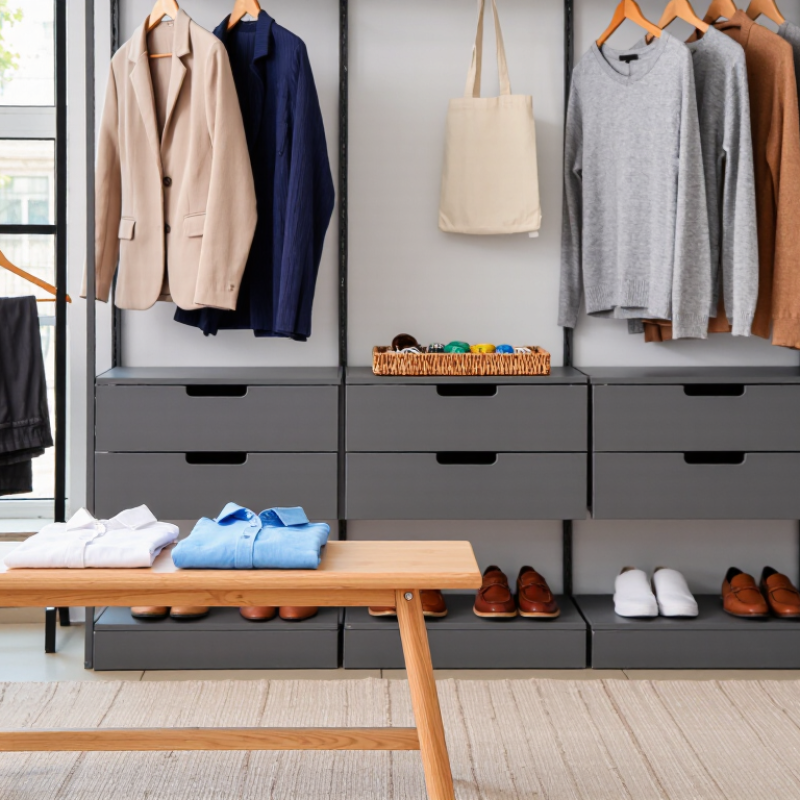
How to Build a Functional Everyday Wardrobe from China?

Define Wardrobe Needs with WRAP’s 30-Wears Durability Benchmark

How to Build a Functional Everyday Wardrobe from China?

A practical wardrobe starts with real wear, not impulse buying. WRAP’s 30-Wears benchmark asks whether you can wear each garment at least thirty times. This simple test changes the buying question: “Will it look good?” becomes “Will it work next month?”

When sourcing from China, request fabric weight, fiber content, shrinkage limits, and seam-strength details. A cotton overshirt should survive repeated washing, commuting, and layering. Ask for a sample first. Photos can hide weak stitching.

WRAP’s Valuing Our Clothes research found that extending a garment’s active life by nine months can reduce its carbon, water, and waste footprints by around 20–30%. The wider textile sector remains significant, contributing an estimated 2–8% of global greenhouse gas emissions, according to the United Nations Environment Programme. These figures make durability practical, not decorative.

Still, thirty wears is not a perfect measure. A winter coat may reach it quickly, while formal trousers may not. My own mistake was buying versatile colors in uncomfortable cuts. They stayed untouched.

Tips:

Build around three bottoms, five tops, one warm layer, and comfortable shoes. Choose neutral colors, but keep one personal detail. Check care labels before ordering. Test movement, pocket depth, and washing shrinkage. Count actual wears for four weeks. Your spreadsheet may look efficient. Your closet may disagree.

Select Fibers Using Textile Exchange’s 2024 57% Polyester Benchmark

Building an everyday wardrobe from China starts with fiber choices, not fashion trends. Textile Exchange’s 2024 Materials Market Report places polyester at 57% of global fiber production in 2023. That figure shows its scale, not automatic sustainability. Polyester can offer durability, quick drying, and stable shape. These qualities suit work shirts, commuter trousers, and lightweight jackets.

Check the fiber label carefully. Ask the manufacturer for exact composition, fabric weight, and test records. A 180–220 gsm polyester knit may work for a breathable summer top. A denser 300 gsm blend can support an overshirt or travel jacket. Recycled polyester may reduce reliance on new fossil feedstock, but it still remains synthetic. Request evidence for recycled content and clarify whether the claim covers the whole garment.

Small details matter. Inspect seam strength, zipper movement, colorfastness, and washing instructions. China’s textile supply network offers many fabric options, yet quality can vary between production batches. I would order samples before selecting a full wardrobe. That costs more time. It prevents expensive mistakes later. I would also avoid building an entire closet from polyester, despite its practical advantages. Cotton, linen, wool, or lyocell can improve comfort and reduce repeated exposure to one material. My first fabric decision might still be wrong. Wear testing, washing, and honest review should change the next order.

How to Build a Functional Everyday Wardrobe from China?

Fiber-selection benchmark based on Textile Exchange’s 2024 57% polyester reference

Polyester represents the largest share in this benchmark because it offers strength, quick drying and easy-care performance. Balance everyday garments with cotton for comfort, cellulosic fibers for softness and breathability, polyamide for abrasion resistance, and wool for temperature regulation. The percentages are a material-planning reference, not a required wardrobe formula.

Build a Functional Capsule Around a 3:1 Top-to-Bottom Ratio

How to Build a Functional Everyday Wardrobe from China?

Build a Functional Capsule Around a 3:1 Top-to-Bottom Ratio

A 3:1 top-to-bottom ratio gives a small wardrobe more movement. For every pair of trousers or skirt, plan three compatible tops. Try one crisp shirt, one lightweight knit, and one relaxed T-shirt. This is not a strict fashion law. It is a useful fitting experiment.

When sourcing from China, check fabric weight, seam finishing, shrinkage, and measurement charts before ordering. A 180–220 gsm cotton jersey can work for everyday T-shirts, while a denser twill suits trousers. Leave room for mistakes. My first capsule used too many pale tops; they looked clean, but stains made daily wear inconvenient.

The ratio also supports longer use. WRAP’s Valuing Our Clothes report found that extending a garment’s life by nine months can reduce its carbon, water, and waste footprints by about 20–30%. The Ellen MacArthur Foundation reported that clothing utilization fell by 36% compared with 15 years earlier. These findings make repeatable outfits more valuable than constant variety.

Choose bottoms in restrained colors, then add tops with different textures and necklines. A practical test is simple: each top should match at least two bottoms. If it matches only one, reconsider it. Keep one imperfect piece if it teaches you something. Wardrobes improve through wear, not just planning.

Verify Chinese Sizes with GB/T 1335 and ISO 3758 Standards

How to Build a Functional Everyday Wardrobe from China?

A dependable wardrobe begins with measurements, not attractive product photos. Chinese garment labels often use formats such as 165/88A. The first number indicates height in centimetres. The second usually refers to chest or bust measurement. The letter describes body shape. However, product listings may explain these codes poorly. Measure your chest, waist, hips, shoulder width, and inseam with a soft tape. Keep the tape level, but do not tighten it.

GB/T 1335 helps interpret Chinese clothing sizes, especially for men’s, women’s, and children’s garments. It is a sizing reference, not a guarantee of fit. Compare your measurements with the seller’s garment chart. Check whether measurements describe the body or the finished garment. A cotton shirt measuring 108 centimetres across the chest may fit differently from a jacket with the same label. I once ignored sleeve length and received a shirt with comfortable shoulders but awkward cuffs. Small mistakes matter.

ISO 3758 serves a different purpose. It standardizes textile care symbols, including washing, bleaching, drying, ironing, and professional cleaning instructions. It does not confirm garment size. Read the care label before building a repeat-wear wardrobe. Textile Exchange reported that global fibre production reached 124 million tonnes in 2023, with further growth projected by 2030. Longer garment use therefore matters. A cold wash may protect shape and colour, but real fabrics still behave differently. Standards guide decisions; they do not replace careful inspection.

Screen Suppliers Using ISO 2859-1 AQL Sampling Levels

Building a functional everyday wardrobe from China starts with disciplined supplier screening. ISO 2859-1 offers a practical framework for checking production lots through AQL sampling. For a lot of 1,201 to 3,200 garments, General Inspection Level II selects 125 pieces. At AQL 2.5, seven defects are acceptable, while eight require rejection. Small numbers matter.

I usually separate defects into critical, major, and minor categories. A broken trouser zipper is major. Uneven stitching may be minor. A sharp metal edge is critical and should allow no acceptance. QIMA’s 2024 Quality Control Report also emphasizes recurring problems in dimensions, workmanship, and labeling across consumer goods inspections. Therefore, suppliers should receive a written defect standard before production begins. Include measurement tolerances, fabric weight, color variation, seam strength, and wash-test requirements. Take photographs of approved samples. Keep them beside the inspection record.

AQL is not a quality promise. It is a risk-control method. This distinction is easy to miss. A passed sample can still hide defects in the remaining garments. For repeat orders, compare supplier results across several lots, not one successful shipment. The U.S. Consumer Product Safety Commission’s 2024 enforcement data also shows why traceable records and product checks remain important for apparel safety. I would review failed samples with the factory and adjust patterns, stitching guides, or operator training. My own mistake was treating a good first inspection as proof of stable production. It was not. Consistent evidence matters more than friendly assurances.

FAQS

What does the 30-wear test mean?

Choose garments you can realistically wear at least thirty times. Ask whether they work next month, not only today. A coat may reach thirty wears quickly. Formal trousers may not.

What should I request when sourcing clothing from China?

Request fabric weight, fiber content, shrinkage limits, and seam-strength details. Ask for measurement charts and washing instructions. Order a sample first. Photos can hide weak stitching.

How can I test a garment before placing a larger order?

Wear the sample while commuting, sitting, layering, and moving. Check pocket depth, zipper movement, seam finishing, and comfort. Wash it several times. The sample may disappoint.

Is polyester suitable for an everyday wardrobe?

Polyester can dry quickly, keep its shape, and offer useful durability. It may suit work shirts, commuter trousers, and lightweight jackets. A 180–220 gsm knit can suit a summer top. A 300 gsm blend may suit an overshirt.

Should I build my whole wardrobe from polyester?

Probably not. Polyester represented about 57% of global fiber production in 2023. That shows its scale, not automatic sustainability. Mixing cotton, linen, wool, or lyocell can improve comfort. My first material choice could still be wrong.

What does a 3:1 top-to-bottom ratio involve?

Plan about three compatible tops for every pair of trousers or skirt. Try a shirt, lightweight knit, and relaxed T-shirt. Each top should match at least two bottoms. It is a fitting experiment, not a strict rule.

How can I make a small wardrobe more practical?

Start with three bottoms, five tops, one warm layer, and comfortable shoes. Use restrained colors, but keep one personal detail. Test movement, pocket depth, and care requirements. Pale tops looked clean in my first capsule. Stains made them inconvenient.

How does longer clothing use affect environmental impact?

Extending a garment’s active life by nine months may reduce related carbon, water, and waste footprints by roughly 20–30%. Longer use also makes repeatable outfits more valuable. Count actual wears for four weeks. Your spreadsheet may look efficient. Your closet may disagree.

Conclusion

How To Build A Functional Everyday Wardrobe starts with understanding real daily needs rather than chasing short-lived trends. Begin by listing the activities, weather conditions, and dress codes your clothing must support. Use a 30-wears durability benchmark to assess whether each item is practical enough to earn a place in your closet. When selecting fabrics, compare comfort, breathability, care requirements, and longevity, while keeping in mind the current market’s heavy reliance on polyester and the importance of choosing fibers suitable for each garment.

Create a compact capsule wardrobe with a balanced 3:1 ratio of tops to bottoms, allowing plenty of outfit combinations without unnecessary excess. Since Chinese sizing may differ from familiar systems, verify measurements against GB/T 1335 and use ISO 3758 symbols to understand care instructions. Before placing an order, evaluate suppliers through ISO 2859-1 sampling procedures, paying attention to sizing consistency, stitching, fabric defects, color accuracy, and finishing quality. This process helps build a reliable wardrobe that is versatile, comfortable, maintainable, and suited to everyday life.

Madeline

Madeline

Madeline is a dedicated marketing professional with a wealth of expertise in our company's core offerings. With a keen understanding of the industry, she brings a unique perspective to her role, consistently delivering high-quality content that highlights the superior aspects of our products. As......