Finding the perfect fit for clothing is vital in the business world. It impacts customer satisfaction and sales. As industry expert Sarah Johnson states, "A well-fitted garment speaks volumes about your brand." This insight emphasizes the importance of understanding how to choose the right fit for clothing.
Many businesses overlook this crucial aspect. They focus on trends but neglect fit. This can lead to high return rates and dissatisfied customers. Customers often seek comfort and style. A poor fit can hinder their experience. Reflecting on this, brands must consider the body types of their target audience.
Experts suggest conducting fit tests with real customers. This can provide invaluable feedback. Additionally, detailed size charts and fitting guides can help. However, perfect fitting solutions may not exist for all. Some trial and error is necessary. It’s essential to listen and adapt to customer needs. Understanding "how to choose the right fit for clothing" is an ongoing journey for any business aiming for success.
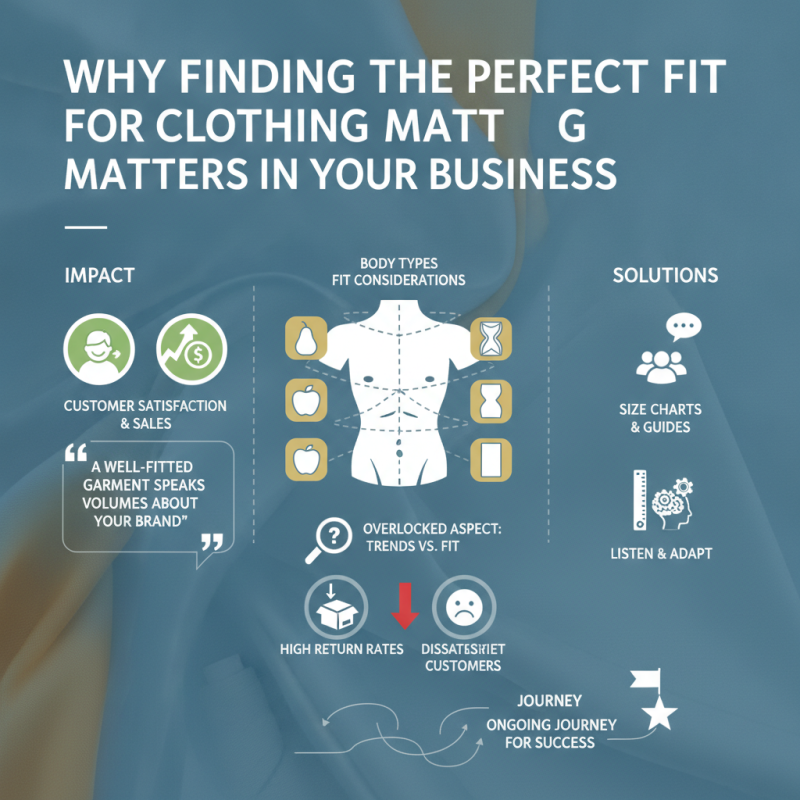
In today's competitive market, customer satisfaction hinges on the perfect fit of clothing. According to a study by the Fashion Institute of Technology, 67% of customers return clothes due to poor fit. This statistic emphasizes the critical link between fit and satisfaction. When customers struggle to find the right size, frustration sets in. A bad fit can lead to mistrust in a brand.
The impact of fit extends beyond returns. A Harvard Business Review report indicates that customers are willing to pay up to 20% more for well-fitting garments. This highlights the potential for increased revenue. In contrast, brands that overlook the importance of fit may see their sales decline. Customer loyalty often hinges on consistent fit.
Investing in fit optimization is not without challenges. Many businesses still rely on traditional sizing charts that don’t reflect diverse body shapes. A significant portion of shoppers experience sizing inconsistencies. This inconsistency can unravel brand loyalty. Addressing fit issues requires dedication to understanding the customer base. Comfort and confidence in clothing choices can significantly enhance overall customer experience. Organizations must prioritize fit to build strong, lasting relationships with their clientele.
| Dimension | Importance | Impact on Customer Satisfaction |
|---|---|---|
| Fit Accuracy | Ensures clothing fits well | Reduces returns and increases loyalty |
| Body Type Consideration | Caters to diverse body shapes | Enhances customer confidence in size selection |
| Size Range | Offers a wide variety of sizes | Increases market reach and customer pool |
| Style Compatibility | Aligns fit with fashion trends | Enhances brand perception and sales |
| Feedback Incorporation | Utilizes customer feedback for adjustments | Builds trust and ensures continuous improvement |
| Material Quality | Impact on how clothing fits | Enhances comfort and satisfaction |
: Fit is crucial as it directly impacts customer satisfaction and reduces return rates.
About 67% of customers return garments because of poor fit, highlighting this problem.
Customers may pay up to 20% more for well-fitting clothes, increasing potential profits.
Many businesses rely on outdated sizing charts, making it hard to serve diverse body types.
Brands should collect data on customer body types and preferences to improve accuracy.
Customer feedback helps identify fit issues and enhances the overall shopping experience.
Comfortable clothing boosts confidence, leading to a better overall experience for shoppers.
Yes, they allow brands to gather useful feedback and improve sizing accuracy effectively.
Regular reviews are essential to ensure sizing remains consistent and reflects customer needs.
No brand is perfect, but striving for inclusivity can greatly enhance customer loyalty.
Finding the perfect fit for clothing is essential for enhancing customer satisfaction and maintaining brand reputation in the retail industry. A well-fitting garment can significantly boost customer loyalty, as people are more likely to return to a brand that understands their sizing needs. Conversely, poorly fitting clothing can lead to negative perceptions and deter customers from future purchases. The economic benefits of offering perfectly fitting clothing are substantial, as it can reduce return rates and increase sales.
However, achieving the perfect fit across diverse body types presents challenges for many businesses. To address this, companies must implement effective strategies for fit measurement and customization. Understanding "How To Choose The Right Fit For Clothing" involves considering various body shapes and sizes, utilizing technology for accurate measurements, and possibly offering tailored options. By prioritizing fit, businesses can enhance customer experiences and drive growth.

 SLO Fashion